
Executive Summary
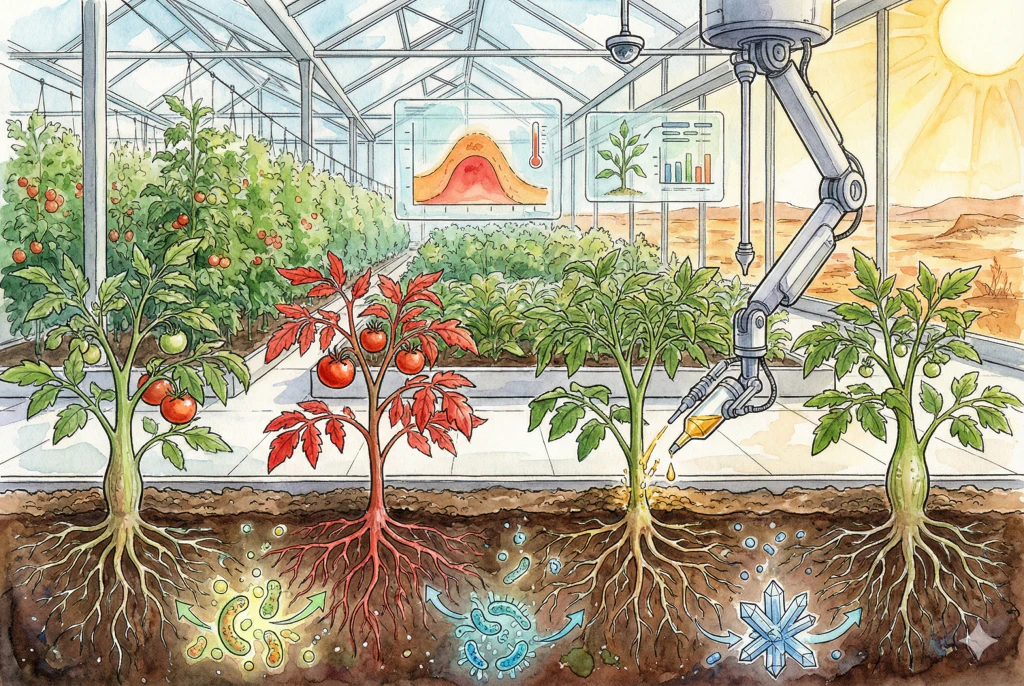
Tomato farming in 2025 has shifted from traditional NPK reliance to advanced physiological management strategies designed to combat extreme climate volatility.
Three critical innovations are highlighted: the structural reinforcement of plants using silicon, the use of marine and microbial biostimulants for heat mitigation, and novel calcium mobilization techniques to prevent blossom end rot.
By integrating these technologies, farmers can transition from simple biomass production to building resilient, high-yield crops capable of withstanding abiotic stress.
Key Takeaways
- Silicon is Essential: Moves beyond a beneficial nutrient to a structural necessity, creating a ‘silica-cuticle’ armor that boosts pest resistance and heat tolerance.
- Biostimulants as Insurance: Seaweed extracts and microbial inoculants are critical for maintaining photosynthesis during heat waves and unlocking soil nutrients like phosphorus.
- Solving Blossom End Rot: Focus shifts from simply adding calcium to mobilizing it via amino-acid chelation and auxin precursors to ensure transport to the fruit during stress.
- Economic Resilience: Investing in resilience inputs offers a high ROI by preserving marketable yield and reducing ‘cull’ rates in hostile weather conditions.
1. Introduction: The End of ‘Spray and Pray’
The extreme weather of the 2024-2025 seasons made one thing clear: standard N-P-K programs are no longer sufficient for high-value tomato production. I’ve seen firsthand how plants fed solely on synthetic macronutrients hit a physiological wall and abort blossoms once temperatures breach 95°F (35°C).
To maintain yields in this volatile climate, we must shift from simply building biomass to engineering resilience. Drawing on recent field trials and data from UC Davis and the University of Florida, this report focuses on the three most critical adjustments I am implementing: integrating Silicon for structural integrity, utilizing Biostimulants for heat stress mitigation, and solving Blossom End Rot through calcium mobilization rather than simple supplementation.
2. Silicon (Si) – The ‘Ghost Nutrient’ Manifests as Essential Armor

For decades, Silicon (Si) occupied a strange limbo in plant nutrition. It is not considered one of the 17 ‘essential’ elements because most plants can complete their lifecycle without it.
However, ‘completing a lifecycle’ and ‘producing a profitable crop in a hostile environment’ are two very different standards. In 2025, Silicon has effectively graduated to essential status for solanaceous crops in high-performance settings.
2.1 The Structural Mechanism: Biological Glass-Making
The primary mode of action for Silicon in tomatoes is structural reinforcement. Unlike mobile nutrients like Nitrogen that move fluidly to new growth, Silicon is absorbed by the roots (typically as monosilicic acid, H₄SiO₄) and deposited irreversibly in the cell walls of the epidermis.
This process creates a silica-cuticle double layer. Imagine typical tomato skin as a canvas tent; silicon-treated skin is akin to a canvas tent reinforced with Kevlar.
- Stem Erectness and Photosynthesis: Research indicates that Si application can increase stem diameter by up to 53% and plant height by over 11%. Thicker stems support heavier fruit loads without lodging and optimize leaf angles for better light interception, directly boosting photosynthetic capacity.
- Physical Pest Resistance: This hardened layer presents a mechanical challenge to pests. Piercing-sucking insects like aphids and whiteflies struggle to penetrate the silicified epidermis. Fungal hyphae find the cell walls resistant to enzymatic degradation. This is ‘nutritional pesticide’ action—a passive defense mechanism powered by fertility.
2.2 Metabolic Regulation: The Antioxidant Engine
The 2024-2025 research literature reveals that Silicon does far more than build walls; it actively regulates the plant’s internal ‘thermostat’ and detoxification systems.
A seminal study published in Agronomy (2024) demonstrated that Si application (at rates of 45 kg ha⁻¹) significantly upregulated the activity of key antioxidant enzymes: Superoxide Dismutase (SOD) and Catalase (CAT).
Why does this matter to a farmer in the Central Valley? Heat and drought stress cause the accumulation of Reactive Oxygen Species (ROS)—essentially cellular toxins that ‘rust’ the plant from the inside out, damaging DNA and membranes.
By boosting SOD and CAT activity, Silicon helps the tomato plant scrub these toxins from its system, maintaining cellular integrity even when ambient temperatures soar.
2.3 The Nitrogen Synergy: Doing More with Less
Perhaps the most economically compelling data point regarding Silicon is its interaction with Nitrogen. Conventional wisdom suggests that pushing Nitrogen maximizes yield, often at the cost of pest susceptibility and fruit quality. However, recent trials have overturned this.
A study comparing fertility regimes found that a moderate reduction in chemical tomato fertilizer (Nitrogen), when combined with organic fertilizer and Silicon, produced yields higher than the full-rate chemical Nitrogen control. Specifically, the ‘Low N + Si’ treatment improved fruit firmness, sugar content (sucrose and fructose), and shelf life.
- Mechanism: Silicon compensates for the reduced vegetative vigor associated with lower Nitrogen by making the existing biomass more structurally efficient. It prevents the ‘luxury consumption’ of Nitrogen that leads to weak, watery cells.
- Implication: Farmers can potentially reduce their Nitrogen bill by 20-30%, reinvest a portion of that savings into Silicon, and achieve a higher quality marketable yield with lower pest pressure.
2.4 Nutritional Enhancement: The Lycopene Connection
Beyond yield, Silicon impacts the nutritional profile of the fruit. Genomic analysis has shown that Si application upregulates the gene phytoene synthase, a rate-limiting enzyme in the carotenoid biosynthesis pathway. This results in significantly higher concentrations of lycopene (the red antioxidant pigment) and Vitamin C in the harvested fruit. In a market where nutrient density is a differentiator, Silicon offers a verifiable value-add.
2.5 Practical Implementation for US Systems
The ‘passive uptake’ myth—that tomatoes don’t take up much silicon—has been debunked. They are ‘passive’ only compared to accumulators like rice, but they respond vigorously to supplementation.
- Sources: Potassium Silicate (liquid) is the standard for fertigation. Calcium Silicate (slag) is effective for soil amendment but slower release.
- Application Rates: Studies suggest effective rates around 45 kg/ha of Na₂SiO₃ equivalent for soil application. For foliar application, concentrations of 1-2 mM are typical, though root uptake is preferred for structural benefits.
- Tank Mixing Caution: Silicon products are often highly alkaline (pH > 10). They must be added to the tank last or buffered, as they can precipitate out other tomato fertilizer nutrients (like Calcium) or hydrolyze pesticides.
3. The Biostimulant Explosion – Seaweed and Microbes as Climate Insurance

If Silicon is the armor, Biostimulants are the software upgrade. The 2025 market is flooded with biological products, projected to reach over $4 billion globally. While ‘snake oil’ abounds, the agronomic validity of specific classes—namely Seaweed Extracts and Microbial Inoculants—has been solidified by rigorous university trials.
3.1 Seaweed Extracts: The Ascophyllum nodosum Gold Standard
Extracts from the brown algae Ascophyllum nodosum dominate the sector. These are not tomato fertilizer products in the traditional NPK sense; their mineral content is negligible. Their power lies in their cocktail of bioactive compounds: alginates, mannitol, fucans, and precursors to plant hormones like cytokinins.
3.1.1 Mechanisms of Heat Tolerance
Heat stress kills tomato yields by denaturing pollen and forcing stomatal closure (which stops photosynthesis). Seaweed extracts act as a ‘priming’ agent.
- Stomatal Conductance: Research from 2024 shows that seaweed-treated plants maintain partial stomatal conductance during heat events. This allows the plant to continue transpirational cooling (acting like an evaporative cooler) and CO₂ uptake when untreated plants have shut down.
- Transcriptional Reprogramming: At the molecular level, these extracts induce the expression of Heat Shock Proteins (HSPs). These proteins act as molecular chaperones, protecting other cellular proteins from unraveling under high temperatures.
- Root Vigor: Heat stress often causes root dieback. Auxin-like compounds in seaweed promote vigorous root branching, maintaining the root-shoot ratio essential for water scavenging.
3.1.2 Field Efficacy Data
Does this translate to the field? Yes. In processing tomato trials, applications of Ascophyllum extracts during heat stress (45°C/113°F) resulted in significantly higher pollen viability and fruit set compared to controls.
In Florida, a comprehensive study of biostimulants found that a specific seaweed/microbial blend (‘Competitor’) increased yield by 76% over the control in sandy soils, driven by improved photosynthetic rates and water use efficiency.
3.2 Microbial Inoculants: Engineering the Rhizosphere
The microbiome is the new frontier of soil science. The focus has shifted from generic ‘soil health’ to specific functionalities: Phosphorus Solubilization and Drought Resistance.
3.2.1 Unlocking Legacy Phosphorus
US agricultural soils often contain massive reserves of total Phosphorus (P) that are chemically ‘locked’ with calcium or aluminum, unavailable to the plant. Phosphate-Solubilizing Bacteria (PSB), such as specific strains of Bacillus and Pseudomonas, secrete organic acids (gluconic acid) and phosphatases that dissolve these bonds.
- The ‘Mining’ Strategy: By inoculating with PSB, farmers can effectively ‘mine’ the P they paid for in previous decades. This allows for a reduction in applied P fertilizer without compromising tissue levels, a critical strategy as phosphate prices remain volatile.
3.2.2 Mycorrhizae: The Secondary Root System
Arbuscular Mycorrhizal Fungi (AMF) (Glomus spp.) are essential for drought resilience. 2025 research confirms that AMF inoculation allows tomatoes to maintain yield even under a 30% reduction in water and nitrogen inputs. The fungal hyphae penetrate soil micropores inaccessible to tomato roots, extracting moisture and nutrients from the ‘depletion zone.’
- Synergy in Stress: A study using a consortium of Azotobacter (N-fixer) and Trichoderma (fungus) showed that the combination was superior to individual inoculants, improving leaf water potential and decreasing canopy temperature by 4.6°C via enhanced transpiration control.
3.3 The Combinatorial Approach
The most advanced data suggests that separating these inputs is less effective than stacking them. A 2025 study in organic tomato production found that the combined application of algal biostimulants and PGPR produced the highest marketable yield (63-67 tons/ha) compared to the control (26 tons/ha).
The algae provide immediate signaling and carbon for the bacteria, while the bacteria provide long-term nutrient availability—a ‘feed the soil to feed the plant’ feedback loop.
3.4 Economic Reality Check: Preventing the ‘Snake Oil’ Purchase
With the market flooded, how does a farmer distinguish technology from marketing?
- The ‘Proprietary Blend’ Red Flag: If a label says ‘proprietary blend’ without listing the specific organism (e.g., Bacillus subtilis strain QST 713) or source (Ascophyllum nodosum), it is suspect. Efficacy is strain-specific.
- The ‘Cure-All’ Claim: Products claiming to replace all tomato fertilizer inputs, kill pests, and eliminate drought stress are physically impossible. Biostimulants enhance efficiency; they do not create matter.
- Regulatory Status: In the US, many biostimulants are registered as ‘soil amendments’ to avoid the rigorous EPA pesticide testing required for ‘plant regulators’. Farmers must rely on University Extension data (like the NC State Vegetable Crop Handbook) rather than manufacturer testimonials.
4. The Calcium Conundrum – Solving Blossom End Rot with Physiology, Not Just Mass

Blossom End Rot (BER) is the nemesis of the tomato grower. It manifests as a black, sunken necrotic spot on the distal end of the fruit, rendering it unmarketable.
The traditional response—’add more calcium tomato fertilizer’—is increasingly viewed by plant physiologists as a crude and often ineffective solution. BER is rarely a problem of soil supply; it is a problem of xylem transport.
4.1 The Physics of Calcium Transport
Calcium (Ca²⁺) is a unique nutrient. Unlike Nitrogen or Potassium, it moves almost exclusively through the xylem (the water-conducting vessels) and moves with the transpiration stream. It goes where the water goes.
- The Transpiration Tug-of-War: In hot, dry weather, the large leaves of a tomato plant transpire aggressively to cool down. This creates a massive suction force that pulls water (and the dissolved Calcium) to the leaves. The developing fruit, which has very few stomata and low transpiration, is bypassed.
- The Result: The leaves get luxury levels of Calcium, while the fruit starves. The cell walls at the blossom end collapse, and rot sets in. This explains why BER often strikes during the first heat wave of the season, even in calcium-rich soils.
4.2 The Failure of Foliar Calcium
A common ‘knee-jerk’ reaction is to spray calcium chloride or nitrate on the foliage. However, Calcium is phloem-immobile. It cannot be loaded into the phloem sap and translocated from the leaves down to the fruit. Unless the spray directly coats the fruit surface (which becomes waxy and impermeable as it matures), foliar applications are often a waste of money. Research confirms that sprays often fail to increase fruit tissue Ca levels significantly.
4.3 The 2025 Solution: Calcium-Mobilizing Biostimulants
The frontier of BER management is not adding calcium, but mobilizing it. New classes of biostimulants are designed to manipulate the plant’s transport kinetics.
4.3.1 Amino Acid Chelation
Chelating calcium with L-amino acids (specifically Glutamic Acid and Glycine) neutralizes the ion’s charge, preventing it from reacting with phosphates in the soil to form insoluble precipitates. More importantly, these amino acids act as signaling molecules. They trigger the opening of calcium ion channels in the root membranes, facilitating rapid uptake.
- Metabolic Priming: Amino acids like L-Proline also help regulate cellular water balance (osmoregulation), maintaining turgor pressure during stress, which indirectly supports nutrient transport.
4.3.2 The ‘Sink Strength’ Strategy
Biostimulants containing auxin precursors (like tryptophan) or specific peptide chains can increase the ‘sink strength’ of the fruit. By stimulating cell division in the fruit tissue, they create a metabolic demand that can competitively pull water and calcium away from the leaves.
- Evidence: A breakthrough study on hydroponic lettuce (a crop highly susceptible to tipburn, a BER analog) showed that a novel calcium-mobilizing biostimulant reduced tipburn incidence by 94-96%, an effect comparable to using expensive vertical airflow fans to drive transpiration.
- The Hydroxycinnamic Acid Breakthrough: In open-field processing tomatoes, a biostimulant based on hydroxycinnamic acid oligomers (marketed as ‘Nurspray’ in some regions) was found to reduce BER incidence to 0%, compared to 5% in the control group. This compound appears to reinforce cell walls and improve vascular flow to the fruit.
4.4 Managing the Environment
Chemistry cannot fix physics entirely. The ‘biostimulant solution’ must be paired with water management.
- Consistent Moisture: Fluctuations in soil moisture disrupt the steady flow of Calcium. Keeping soil moisture constant ensures a steady baseline supply.
- Anti-Transpirants? Some growers are experimenting with mild anti-transpirants or shade cloth to reduce the ‘pull’ of the leaves during extreme heat, thereby allowing more hydrostatic pressure to direct Calcium to the fruit.
5. Integrated Management: The ‘Resilience’ Fertility Program
Based on the synthesis of 2024-2025 research, a modern fertility program should look different from the NPK-heavy schedules of the past.
The following table integrates the ‘Hot Topics’ into a practical phenological schedule.
Table 1: The 2026 Tomato Fertilizer & Resilience Protocol
| Growth Stage | Priority | Recommended Input Class | Specific Action / Product Type | Agronomic Rationale & Evidence |
|---|---|---|---|---|
| Transplant / Establishment | Root Architecture & P-Access | Microbial Inoculant | Drench with Trichoderma spp. + Glomus (AMF) + PSB (Bacillus). | Establish the ‘second root system’ immediately. Solubilize legacy P for early vigor. |
| Vegetative Growth | Structural Integrity | Silicon (Si) | Foliar or Drench: Potassium Silicate (K₂SiO₃). | Build the silica-cuticle armor against pests. Strengthen stems. |
| Pre-Flowering | Hormonal Priming | Seaweed Extract | Foliar: Cold-processed Ascophyllum nodosum. | Prime cytokinins for bud differentiation. Upregulate Heat Shock Proteins before summer stress. |
| Fruit Set / Sizing | Calcium Transport (BER Prevention) | Ca-Mobilizer | Foliar: Amino-Acid Chelated Calcium + Hydroxycinnamic Acids. | Direct Ca to fruit sink. Prevent BER via improved xylem transport, not just mass loading. |
| Heat Wave Event (Forecast) | Acute Stress Defense | Stress Mitigator | Foliar: High-rate Seaweed + Potassium (K). | Maintain stomatal conductance. K regulates turgor; Seaweed prevents oxidative damage. |
| Ripening | Quality & Shelf Life | Functional Nutrient | Drench: Potassium + Silicon. | Enhance lycopene/Vitamin C synthesis. Si improves skin firmness for shipping. |
5.1 Tank Mixing and Compatibility
A critical warning for farmers adopting this protocol: Chemistry matters.
- Silicon pH: Potassium silicate has a very high pH (>10). It can hydrolyze (break down) pesticides and react with Calcium tomato fertilizer to form insoluble silicates (sand) in the tank. Always perform a jar test. Add Silicon first, dilute, then buffer pH before adding other products.
- Microbial Viability: Do not mix living inoculants (bacteria/fungi) with copper fungicides or strong bactericides. Apply them in separate passes or via irrigation injection to ensure survival.
6. Economic Analysis: The ROI of Resilience

Is this ‘fancy’ fertility worth the cost? The data suggests that in the volatile climate of 2025, it is the only way to ensure profitability.
6.1 Yield Preservation vs. Maximization
The economic argument for biostimulants is based on yield preservation.
- Scenario: A heat wave hits during fruit set. In a standard NPK program, this might cause 30% blossom drop.
- Impact: On a 40-ton/acre processing tomato crop, a 30% loss is 12 tons. At $100/ton, that is a $1,200/acre loss.
- Biostimulant Cost: A robust seaweed/silicon program might cost $50-$80/acre per season.
- Result: If the program saves even half the blossoms (saving 6 tons), the Return on Investment (ROI) is over 7:1.
6.2 The ‘Cull’ Factor
Reduction of unmarketable fruit is pure profit. Inputs (land, water, labor) are spent on every fruit, good or bad.
- BER Reduction: Reducing Blossom End Rot from 5% to 0% (as seen in the Nurspray trials) essentially adds 5% marketable yield with no additional land or water use. This efficiency is critical when margins are tight.
6.3 Fertilizer Offsets
Advanced growers are using microbial inoculants to reduce synthetic tomato fertilizer applications by 20-30% without yield drag.
- Savings: Reducing DAP (Diammonium Phosphate) by 50 lbs/acre can save ~$20/acre. This saving can effectively subsidize the cost of the microbial inoculant, making the biological ‘insurance’ cost-neutral.
7. Future Outlook: Beyond 2025
The trajectory of tomato farming is clear: high-tech, biologically integrated, and data-driven.
7.1 Living Sensors and Color-Changing Roots
Research out of Cornell University in late 2025 points to the next frontier: genetic engineering for diagnostics. Doctoral students have developed ‘RedAlert’ tomato plants that express a vivid red pigment in their leaves when the root zone is Nitrogen-deficient. This ‘living sensor’ technology would allow farmers to apply tomato fertilizer based on real-time plant signaling rather than lagging soil tests or schedules.
7.2 AI and Precision Application
The integration of AI-based weather forecasting, as seen in recent initiatives by Bihar Agricultural University and adopted globally, allows for predictive fertilization. Algorithms can now predict a heat wave 10 days out and recommend a specific biostimulant application window to maximize the ‘priming’ effect before the stress arrives.
7.3 The Final Verdict
The ‘hot topics’ of 2025—Silicon, Biostimulants, and Calcium Mobilization—are not passing fads. They are the industry’s adaptation to a hotter, more hostile world. For the US farmer, the takeaway is simple: The soil is no longer just a bank account of N-P-K to be drawn down.
It is a living ecosystem to be managed, and the plant is a sophisticated machine that requires software (biostimulants) as much as it requires fuel (conventional tomato fertilizer). Those who master this new physiology will thrive; those who stick to the ‘spray and pray’ NPK models of the past face an increasingly uncertain harvest.

Leave a Reply